The Field Guide to DMT Entities – David Jay Brown – Zoom

Mapping the Beings of Hyperspace: A Guided Exploration

Join psychedelic explorer and consciousness researcher David Jay Brown, author of The Illustrated Field Guide to DMT Entities, for a fascinating and interactive journey into the mysterious realms of psychedelic hyperspace. In this unique presentation for London’s Wynd Museum of Curiosities, Fine Art & UnNatural History—a haven for the wondrous, the arcane, and the otherworldly—David will discuss his groundbreaking work in developing a taxonomy of otherworldly intelligences encountered during DMT experiences.

Reports from psychonauts suggest that the DMT dimension is populated by a bewildering array of advanced, autonomous beings—entities that appear intelligent, communicative, and at times even more real than everyday reality. As the boundaries of consciousness expand, so too does the need to map the terrain and catalog the inhabitants of this interdimensional ecosystem.

From the trickster jesters and self-transforming machine elves to the mantis and octopoid healers, reptilian time-lords, and classic Grey aliens, David will introduce you to the most commonly encountered DMT entities, drawing from decades of research, firsthand accounts, and his own experiences. This talk invites participants to consider the profound implications of these encounters—whether they are aspects of the psyche, independent intelligences, or emissaries from parallel realities.

Don’t miss this thought-provoking discussion that blends science

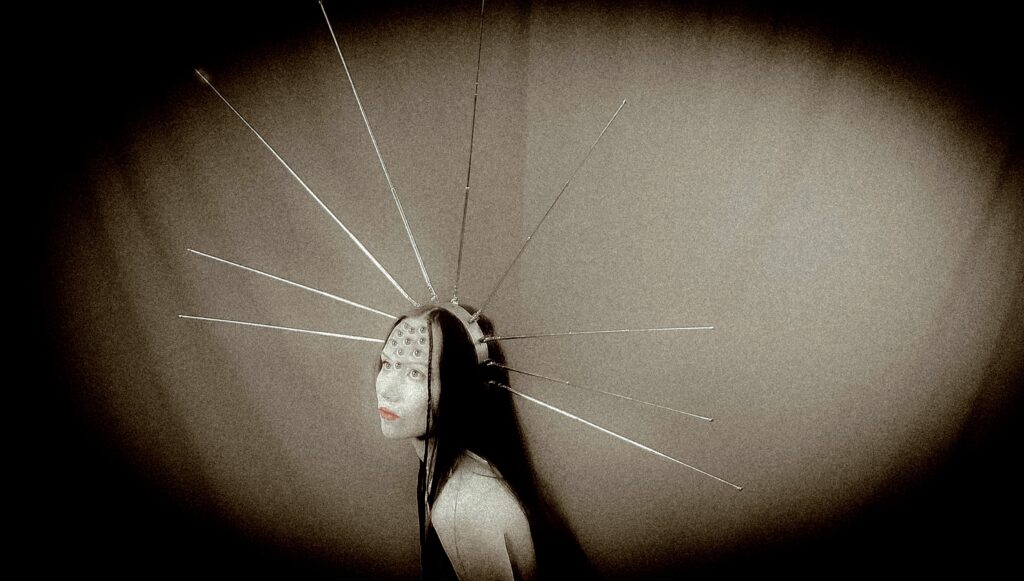
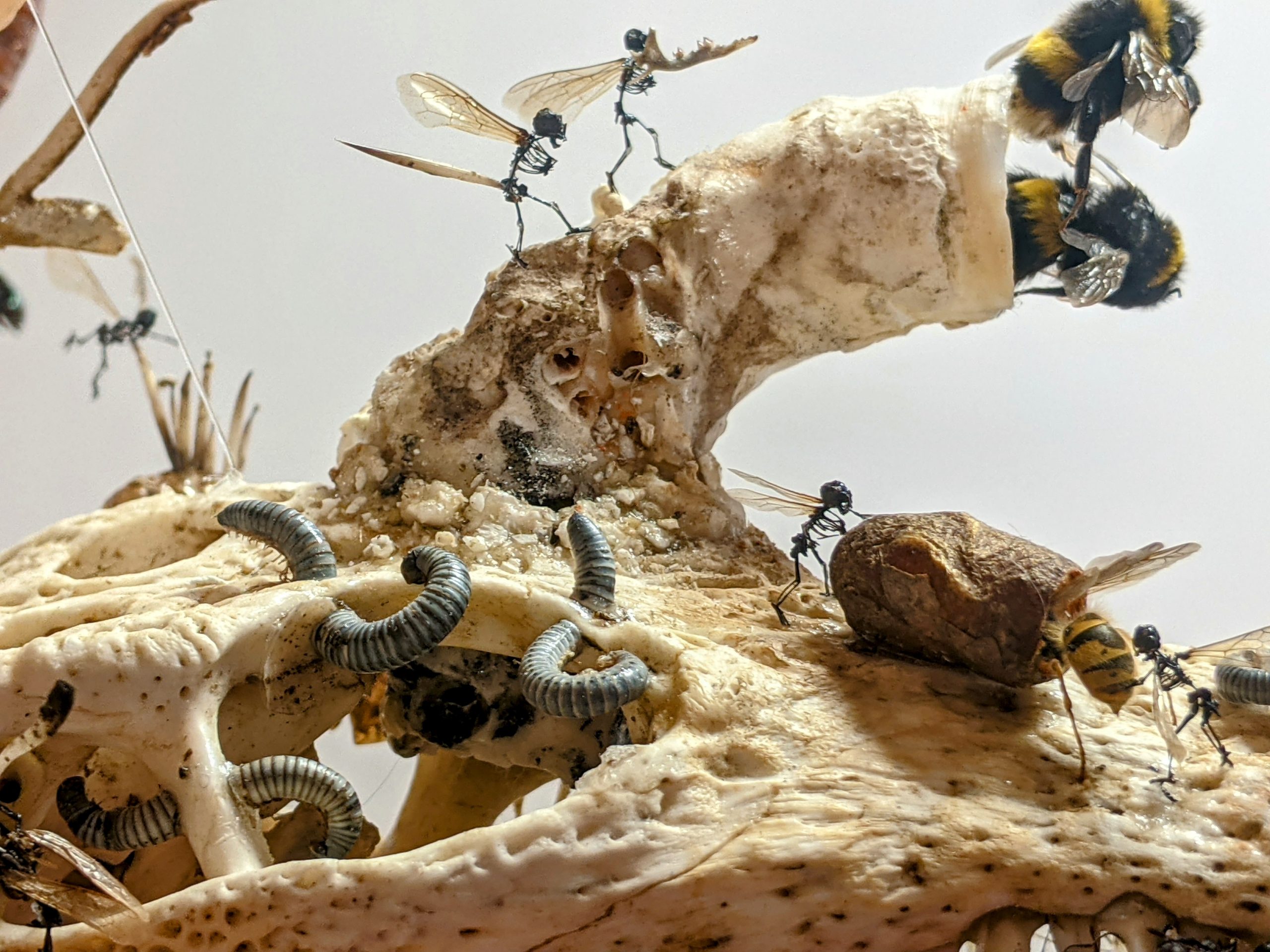
[Image by Sarah Phinn Huntley]

Speaker Bio

David Jay Brown is the author of 19 books on the evolution of consciousness, including Dreaming Wide Awake, The New Science of Psychedelics, and The Illustrated Field Guide to DMT Entities. He holds a master’s degree in psychobiology from New York University and has spent over three decades investigating altered states, transpersonal phenomena, and the frontier science of consciousness.

Speaker Bio

Sara Phinn Huntley is an artist, writer, and researcher who has spent two decades exploring the convergence of psychedelics, technology, and philosophy. As a DMT psychonaut and hyperspace cartographer, she’s pioneering the use of VR technology to investigate visual and spatial imagination in real-time.Her multidisciplinary work documents psychedelic states through an innovative blend of mediums exploring chaos mathematics, geometry, and performance, creating what she calls a “cargo cult effect of higher dimensional artifacts.” Her research has been published by the Multidisciplinary Association of Psychedelic Studies and featured in notable works including Diana Reed Slattery’s “Xenolinguistics”and “The Illustrated Field to the DMT Entities” with David Jay Brown.

Curated and hosted by

Maya Bracknell Watson is an interdisciplinary artist, performer, retired cult leader and psychedelic researcher.

Her background is in psychedelic parapsychology research with Greenwich University, specialising in exceptional human experience and entity encounters on psychedelics, and as an artist. She has studied shamanism for 10 years, working closely with Amerindian indigenous shamanic cultures of Mexico and Peru and western neoshamanic groups, focusing on the introduction and integration of indiginous and animistic knowledge and perspectives to westerners and western ontologies.

She publicly lectures on the subjects of psychedelics and shamanism, and produces art on the subjects informed by her research and experience, including films, performances, writing and immersive worlds. She has performed and exhibited at the Tate Britain and Breaking Convention and is the creator and host of Psychedelicacies, an online lecture series.

Walking between the worlds of art, psychedelic science and shamanism she works to bridge them and uses each as investigatory tools to inform and articulate each other.
Maya
maya

don’t worry if you miss it – we will send you a recording valid for two weeks the next day

Mythical Mothers, Monsters, and Mesopotamia – Dr Louise Pryke – Zoom

Mythical Mothers, Monsters, and Mesopotamia
Despite the antiquity of the topic, motherhood in Mesopotamia has received little attention in modern scholarship. Yet mothers are extremely important cultural figures throughout many periods, with numerous heroes of Mesopotamian epic depicted having close connections to their mothers. Maternal figures often play a pivotal role in myths, and historical kings as well as legendary ones are shown to value their mother’s guiding wisdom. In this talk, we consider the connection of motherhood, wisdom, and protection in Mesopotamia, and discover that even quasi-divine heroes who cut pathways through mountains and battle giant monsters cannot succeed without the support and wisdom of their mothers.
Bio
Dr Louise M. Pryke is a research associate at the University of Sydney. She is the author of several books including Ishtar (2017), Gilgamesh (2019), and Wind (2023).
Curated & Hosted by
Marguerite Johnson is a cultural historian of the ancient Mediterranean, specialising in sexuality and gender, particularly in the poetry of Sappho, Catullus, and Ovid, as well as magical traditions in Greece, Rome, and the Near East. She also researches Classical Reception Studies, with a regular focus on Australia. In addition to ancient world studies, Marguerite is interested in sexual histories in modernity as well as magic in the west more broadly, especially the practices and art of Australian witch, Rosaleen Norton. She is Honorary Professor of Classics and Ancient History at The University of Queensland, and a Fellow of the Australian Academy of the Humanities.
Image: Plaque with face of the demon Humbaba, Babylon, c. 2000-1600 BCE. The Met. Public Domain.
don’t worry if you miss it – we will send you a recording valid for two weeks the next day
Cholera in Victorian England: Medicine, Myths, and Modernity – Lena Heide Brennand – Zoom


Cholera in Victorian England: Medicine, Myths, and Modernity

Step into the 19th century and explore the devastating impact of cholera on Victorian England. Learn how this deadly disease swept through crowded cities, challenging public health systems and sparking fear across all classes of society. Discover the evolving understanding of disease transmission, from miasma theory to the groundbreaking work of pioneers like John Snow, whose mapping of outbreaks paved the way for modern epidemiology.

Through vivid historical accounts, we will delve into the era’s social and medical responses, including sanitation reform, quarantine measures, and curious remedies like “cholera belts” and aromatic pouches. This lecture examines how cholera shaped public health policies and attitudes toward urban living, leaving a legacy that resonates to this day. Join us to uncover the interplay between science, society, and the human will to overcome epidemic crises in a rapidly industrializing world.

Bio:

Lena Schattenherz Heide-Brennand is a Norwegian lecturer with a master degree in language, culture and literature from the University of Oslo and Linnaeus University. She has been lecturing and teaching various subjects since 1998. Her field of interest and main focus has always been topics that others have considered strange, eccentric and eerie, and she has specialised in a variety of dark subjects linked to folklore, mythology and Victorian traditions and medicine. Her students often point out her thorough knowledge about the subjects she is teaching, in addition to her charismatic appearance. She refers to herself as a performance lecturer and always gives her audience an outstanding experience

don’t worry if you miss it – we will send you a recording valid for two weeks the next day
 

Nordic Midsummer Stories – Lena Heide Brennand – Zoom

Nordic Midsummer Stories

Join us for an enchanting lecture that transports you to the heart of Scandinavia, where the magic of midsummer comes alive through captivating stories and folklore! As the sun shines brightest and the nights are filled with enchanting possibilities, discover the rich tapestry of midsummer traditions that have been passed down through generations. From tales of mythical creatures dancing in the twilight to the spirited celebrations that honor the earth’s bounty, these stories reflect the deep connection between the people and their natural surroundings. We’ll explore the vibrant customs, rituals, and legends that define this magical season, shedding light on how midsummer shapes cultural identities and community bonds across the Nordic countries. Perfect for lovers of folklore and those curious about Scandinavian heritage, this lecture promises to inspire a sense of wonder and appreciation for the age-old stories that continue to illuminate our world. Don’t miss this opportunity to immerse yourself in the joyous spirit of midsummer.

Bio:

Lena Schattenherz Heide-Brennand is a Norwegian lecturer with a master degree in language, culture and literature from the University of Oslo and Linnaeus University. She has been lecturing and teaching various subjects since 1998. Her field of interest and main focus has always been topics that others have considered strange, eccentric and eerie, and she has specialised in a variety of dark subjects linked to folklore, mythology and Victorian traditions and medicine. Her students often point out her thorough knowledge about the subjects she is teaching, in addition to her charismatic appearance. She refers to herself as a performance lecturer and always gives her audience an outstanding experience

don’t worry if you miss it – we will send you a recording valid for two weeks the next day
Mummified cats & other concealed ritual objects– Wayne Perkins – Zoom


Deliberately Concealed Objects & Ritual Deposits in Ancient Buildings

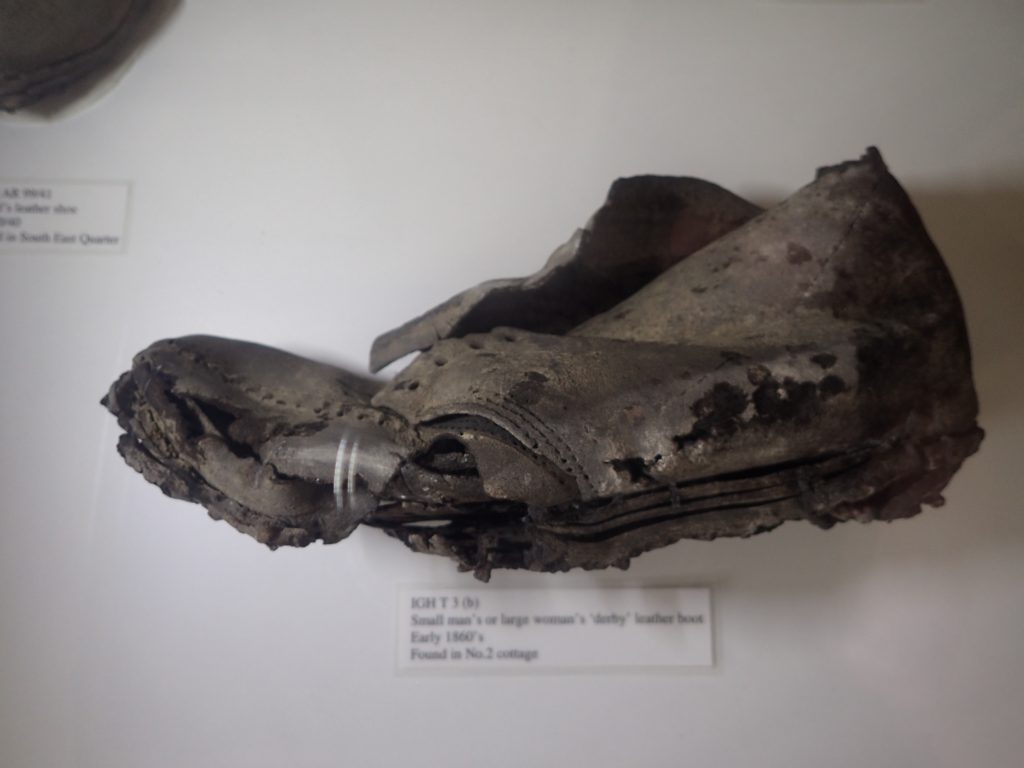
The phenomenon of old leather shoes and boots being deliberately concealed up the chimney, large caches of worn-out clothes and objects discovered within the voids of old buildings, along with mummified cats found between the walls are a range of attested practices acknowledged by archaeologists.

It is now understood that the objects had been inserted by the inhabitants who believed that they were going to act as a prophylactic (a measure taken to fend off disease and general pestilence), bring good luck to the inhabitants, ward off the evil eye or, in some cases, avert the attentions of the witch’s familiar.

It would seem that secrecy and non-disclosure of the concealment had been crucial to their potency.


Speaker Bio

Wayne Perkins is an archaeologist of 23 years with a special interest in apotropaic graffiti, folklore and concealed objects recovered from ancient buildings.

Don’t worry if you miss it – we will send you a recording valid for two weeks the next day
 

The Werewolf of Hull – Deborah Hyde – Zoom


Was a werewolf really loping around Hull’s Barmston Drain in 2016? Folklorist Deborah Hyde investigates this modern manbeast mystery

In 2016, a peculiar story hit local headlines – a werewolf was loping around Barmston drain, an eighteenth century canal in Hull. Such tabloid gold couldn’t stay local for long and national newspapers amplified the reports to the point that international publications like the Huffington Post repeated them. Rock start Alice Cooper even commented on social media. But what lay behind the sensational spin? How many eye-witnesses were there and what did they really say? The Hull Werewolf’s context – both folkloric and contemporary – is rewarding to examine, to illuminate the content and transmission of this popular twenty-first century cryptid tale.

Bio

Deborah Hyde writes and broadcasts about religion and dark folklore. She regularly appears as a contributing expert on the top BBC podcast Uncanny and she edited The Skeptic magazine for ten years.

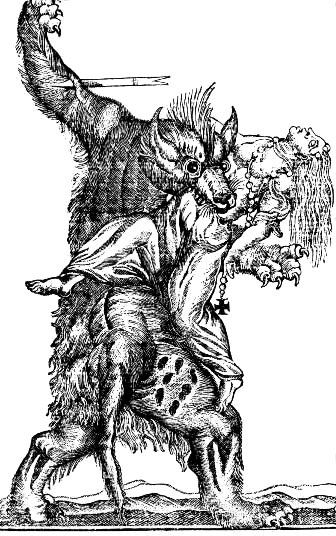
The illustration is of the Beast of Gevaudan, a comparatively late (1764-1767) werewolf case from France.

Don’t worry if you miss it – we will send you a recording valid for two weeks the next day
 

Macaroni and sausages – Mr. Punch’s journey from Napoli to somewhere-on-sea – John Rudlin – Zoom

Macaroni and sausages – Mr. Punch’s journey from Napoli to somewhere-on-sea

Join award-winning actor, academic, playwright, director, theatre designer, reviewer, and onetime showman, flyman and rigger, John Rudlin for a fabulous journey into the life and times of the outrageous Mr Punch! A renowned expert in Italian commedia dell’arte, John traces Mr Punch’s origins in the Italian theatre through to the supposedly English tradition of a loveable but murdering slapstick puppet. John will also take more than a glance at the women in Mr Punch’s life.

In his little booth, Punch is today the sole performing survivor in England of the great theatrical genre of commedia dell’arte, which dominated the European stage for almost three centuries. John Rudlin is an acknowledged expert in the form – his Commedia dell’arte, a Handbook for Actors has been continuously in print for forty years. (See www.commediahandbook.com). He is the current holder of the Society For Theatre Research Stephen Joseph award.

Speaker Bio:

John Rudlin is the author of numerous books, articles, and chapters, including Jacques Copeau (CUP, 1986); Copeau, Texts on Theatre (Routledge, 1990); Commedia dell’Arte, an actor’s handbook (Routledge, 1994); Commedia dell’Arte, a resourcebook for troupes (Routledge, 2001); Commedia dell’Arte: its structure and tradition, John Rudlin in conversation with Antonio Fava (Routledge, 2021); The Metamorphoses of Commedia dell’Arte: whatever happened to Harlequin? (Palgrave/Macmillan, 2022).Checkout John’s website for more publications – including his keynote addresses: ‘Flour Sacks and Farthingales’ for the conference Crossing Boundaries: Commedia Dell’ Arte Across Gender, Genre, and Geography (University of Windsor, Ontario, 2013) and ‘Jacques Copeau’s Legacy to Theatre and Education’ for The Actor as Person, Theatre as Communion (University of Notre Dame, Indiana, 2013) – available at www.commediahandbook.com

Curated & Hosted by:

Marguerite Johnson is a cultural historian of the ancient Mediterranean, specialising in sexuality and gender, particularly in the poetry of Sappho, Catullus, and Ovid, as well as magical traditions in Greece, Rome, and the Near East. She also researches Classical Reception Studies, with a regular focus on Australia. In addition to ancient world studies, Marguerite is interested in sexual histories in modernity as well as magic in the west more broadly, especially the practices and art of Australian witch, Rosaleen Norton. She is Honorary Professor of Classics and Ancient History at The University of Queensland, and a Fellow of the Australian Academy of the Humanities.

don’t worry if you miss it – we will send you a recording valid for two weeks the next day
Six Centuries of Madness- the History of Bedlam Asylum – Lena Heide-Brennand – Zoom

Six Centuries of Madness – the History of Bedlam Asylum

Step into the haunting history of Bedlam Asylum, a name synonymous with madness and human suffering. Founded in the 13th century, this notorious institution became a chilling symbol of how society treated the mentally ill. Journey through the eerie corridors where the cries of the tormented once echoed, and explore the harrowing tales of its residents, many of whom were subjected to barbaric treatments and inhumane conditions. From its early days as a charitable institution to its transformation into a spectacle for public viewing, Bedlam’s legacy is steeped in tragedy and intrigue. Discover the dark secrets behind its walls, the infamous patients who resided there, and the evolution of mental health care that emerged from its shadows. This lecture promises to immerse you in the unsettling yet fascinating narrative of Bedlam, revealing how this once-feared asylum continues to captivate our imagination and challenge our understanding of mental health today. Dare to uncover the eerie truths behind one of history’s most infamous institutions.

Bio:

Lena Schattenherz Heide-Brennand is a Norwegian lecturer with a master degree in language, culture and literature from the University of Oslo and Linnaeus University. She has been lecturing and teaching various subjects since 1998. Her field of interest and main focus has always been topics that others have considered strange, eccentric and eerie, and she has specialised in a variety of dark subjects linked to folklore, mythology and Victorian traditions and medicine. Her students often point out her thorough knowledge about the subjects she is teaching, in addition to her charismatic appearance. She refers to herself as a performance lecturer and always gives her audience an outstanding experience, Lena’s New Book – Mythical Creatures in Scandinavian Folklore is now available on Amazon

don’t worry if you miss it – we will send you a recording valid for two weeks the next day
The Agony and the Ecstasy: Sacred and Carnal Devotion to Saints – Eric Huang – Zoom

The Agony and the Ecstasy: Sacred and Carnal Devotion to Saints

European art overflows with luxurious depictions of Catholic divinities. Legends of saints’ executions were once painted in gruesome detail in the Middle Ages. They were stylised like cartoons to highlight ecstatic pain and suffering: the gorier the holier. In the Renaissance, depictions took on a naturalistic form. What were once graphic images of torture became voluptuous works of art: bulging biceps on arms bound to a tree, full breasts expressing milk, enraptured nude pin-ups punctured by arrows and swords. The faces and bodies of Catholic figures were often portraits of illicit lovers commissioned by bishops, bankers, kings – hidden away in private salons and invitation-only drawing rooms for the delectation of the select few. Join Eric Huang, creator and host of Saint Podcast, in this streaming lecture about the erotic in Catholic legend and art – and explore how devotional images have inspired both sacred and carnal ecstasy since the Renaissance.

[image] Mattia Preti, ‘Saint Sebastian’, c.1660. Neapolitan Gallery.

Bio:

Eric Huang studied palaeontology. Unfortunately, field work didn’t live up to his Jurassic Park dreams, so he worked as a tour guide at Universal Studios until landing a job as secretary to the Creative Director of Disney Publishing, inadvertently launching a career in books.

Today, Eric is the creator of Saint Podcast, an exploration of saints’ stories. He’s the author of the children’s fantasy series, Guardians of the New Moon, that reimagines East Asian legends. And he teaches at City, University of London’ Masters in Publishing course.

Eric lives in London with his boyfriend Brian and their cat McNulty.

Curated & Hosted byMarguerite Johnson is a cultural historian of the ancient Mediterranean, specialising in sexuality and gender, particularly in the poetry of Sappho, Catullus, and Ovid, as well as magical traditions in Greece, Rome, and the Near East. She also researches Classical Reception Studies, with a regular focus on Australia. In addition to ancient world studies, Marguerite is interested in sexual histories in modernity as well as magic in the west more broadly, especially the practices and art of Australian witch, Rosaleen Norton. She is Honorary Professor of Classics and Ancient History at The University of Queensland, and a Fellow of the Australian Academy of the Humanities.

don’t worry if you miss it – we will send you a recording valid for two weeks the next day

Beyond Sawney Bean: Scottish Cannibal Families – Fact, Fiction or Propaganda? – Geoff Holder – Zoom

Beyond Sawney Bean: Scottish Cannibal Families – Fact, Fiction or Propaganda?

Explore several cases of cannibalism from Scottish history, which may not be all that they seem.

Did three Scottish fathers from different centuries feed their families by killing and eating unsuspecting wayfarers during times of war and famine? According to the historical records they did. But were these stories actual reportage? Tall tales? Or even anti-Scottish propaganda? Join author Geoff Holder as he tries to uncover the ghastly truth or despicable lies behind these episodes reported from Dundee, Perth and Ayrshire. Expect a good deal of vile unpleasantness. And as a bonus, learn the story of a genuine nineteenth-century Scottish cannibal lass!

Bio

Geoff Holder is a Welsh author and screenwriter. He has published more than 30 books on the paranormal and general weirdness, including Zombies From History, 101 Things to Do With a Stone Circle, Poltergeist over Scotland, Scottish Bodysnatchers and The Guide to the Mysterious Lake District. He writes folk-horror screenplays and genre-mashup novels from a 300-year-old allegedly haunted house in deepest France and likes dogs and music with rocks in it.

Curated & Hosted by

Marguerite Johnson is a cultural historian of the ancient Mediterranean, specialising in sexuality and gender, particularly in the poetry of Sappho, Catullus, and Ovid, as well as magical traditions in Greece, Rome, and the Near East. She also researches Classical Reception Studies, with a regular focus on Australia. In addition to ancient world studies, Marguerite is interested in sexual histories in modernity as well as magic in the west more broadly, especially the practices and art of Australian witch, Rosaleen Norton. She is Honorary Professor of Classics and Ancient History at The University of Queensland, and a Fellow of the Australian Academy of the Humanities.

don’t worry if you miss it – we will send you a recording valid for two weeks the next day