Hugh Newman on Gobekli Tepe – Zoom

Hugh Newman on Gobekli Tepe
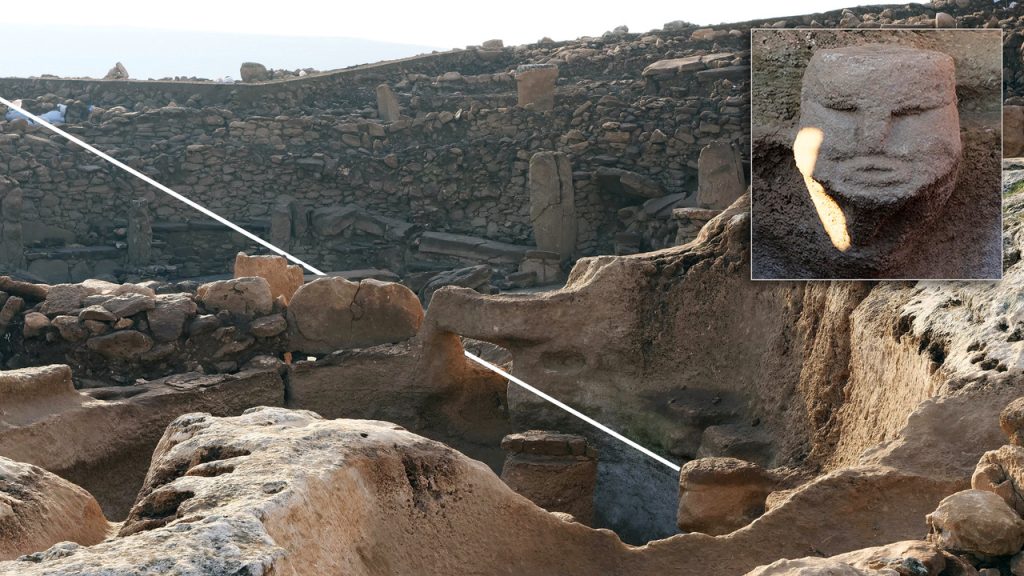
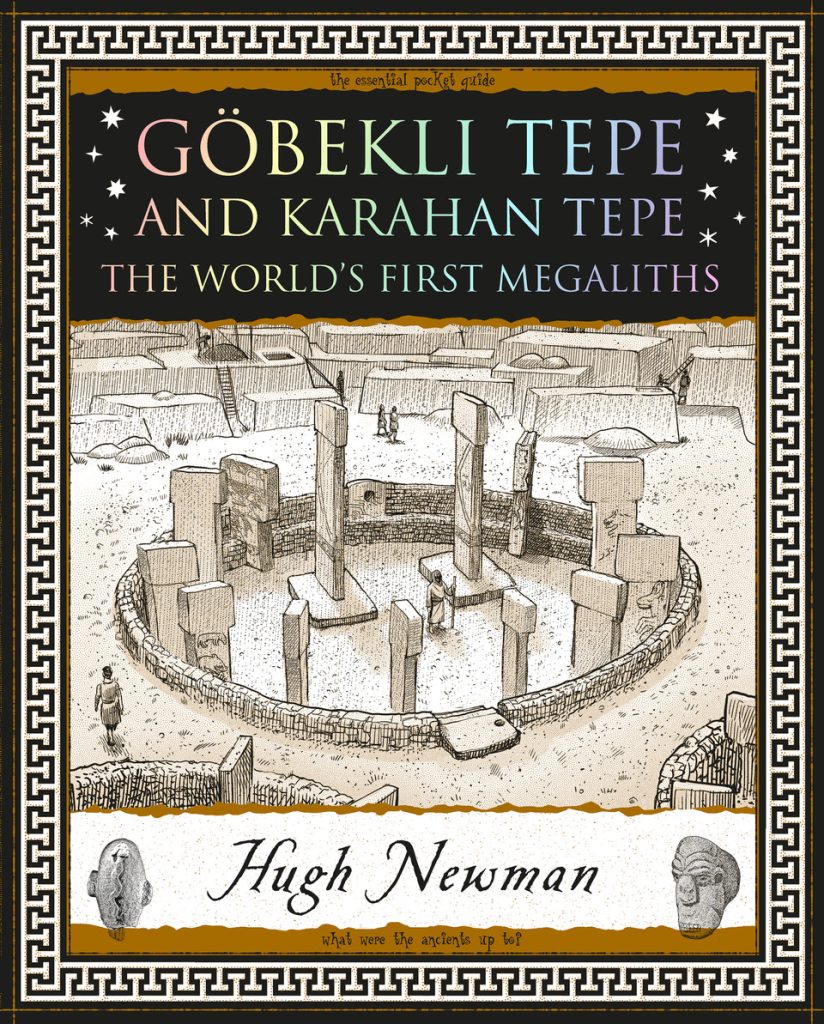
What is the earliest temple complex on Earth? Who built it? Is it really 7000 years older than Stonehenge and the Pyramids. How did such a sophisticated civilisation evade detection for so long? In this groundbreaking talk  packed with original research and illustrations, megalithomaniac Hugh Newman tells the story of Göbekli Tepe, Karahan Tepe, Nevali Çori and other temples in Turkey, which are so old that their very existence challenges history as we know it.
Hugh Newman is an author, documentary maker, world explorer, megal ith researcher, and expedition leader. He is the author of Göbekli Tepe and Karahan Tepe: The World’s First Megaliths (2023), Stone Circles (2017), Earth Grids: The Secret Pattern of Gaia’s Sacred Sites (2008); co-author of Giants On Record: America’s Hidden History, Secrets in the Mounds and the Smithsonian Files (2015) and The Giants of Stonehenge and Ancient Britain with Jim Vieira (2021) and contributed to Megalith: Studies In Stone (2018), Sensing The Earth (2020) and Geomancy (2021). He is published in three ‘Ancient Origins’ e-books. He has been a regular guest on History Channel’s Ancient AliensUnXplainedSearch for the Lost Giants and has featured in The Alaska Triangle (Travel Channel), Forbidden History (Discovery Channel), Secrets of the Ark (Science Channel), Mythic Britain (Smithsonian Channel), Ancient Civilizations (Gaia), Cursed Treasure (History), In Search of Monsters (History), Mysteries of the Pyramids with Dara O Briain (Channel 5) and Ancient Tomorrow (US) TV Shows. He is a video producer who publishes regular films of his worldwide explorations at www.youtube.com/MegalithomaniaUK.
don’t worry if you miss it – we will send you a recording valid for two weeks the next day
Becoming Monsters – An Online Writing Workshop – Tania De Rozario – Zoom

Becoming Monsters – An Online Writing Workshop

Horror movie monsters often articulate the cultural anxieties of their time. They have the power to reflect, reinforce, and sometimes resist, prevailing notions of gender, morality, justice and beauty. Asking what makes a monster scary often tells us a lot about what society fears.

In this generative workshop, Tania De Rozario shares her love of horror films and feminine monstrosity and will show how, as a queer woman, empathising with female monsters has helped her discover new ways to tell her stories.

This single-session course will focus on helping participants use horror, myth, and monsters to discover news ways to tell their own stories. It will comprise a short warm-up exercise, a 20-minute presentation, 50 minutes of guided writing focusing on persona, and an opportunity to share the writing that was generated during the session. The workshop aims to help participants to generate new ideas, encourage them to discover new ways to tell their own stories and provide them with a fun/meaningful experience.

This class is open to writers of all experience levels, 18 and above. Please note that this session will include mentions of violence, assault and trauma in the context of some of the films that are mentioned. It will also contain still images from horror films that may be distressing for some participants.

Participant Preparation – Participants should be prepared to participate in generative writing exercises during class-time. There is no formal feedback given but participants will have the opportunity to share work generated in class, out loud or in the chat, if there is time and if they desire.

Instructor Bio

Tania De Rozario is an essayist, poet, visual artist and the author of four books. Her work engages with issues of gender, monstrosity, queer identity, home, and notions of belonging. Her latest collection, Dinner on Monster Island, (Harper Perennial, 2024), has been described as “sharp and searing” (Ms. Magazine), “unique” (Publishers Weekly), “a book with resonance” (Kirkus Reviews), “taut and riveting” (LA Times), “a gem of queer literature” (Audiofile), “a book to savor” (Bay Area Reporter), “elegant”, “droll” and “magnetic” (British Columbia Review). Tania’s writing has won the New Ohio Review Nonfiction Contest (2020) and the Muriel Craft Bailey Poetry Contest (2021), has been a finalist at the Lambda Literary Awards (2021) and has been published in journals/anthologies across four continents.

This is a participation workshop only, if you are unable to attend please request a refund as this course will not be recorded

Horror and Hilarity: The Théâtre du Grand-Guignol – a Zoom talk with Richard Hand – Zoom

The Théâtre du Grand-Guignol (1897–1962), tucked away in the cobblestoned alleys of Pigalle, Paris, earned a notorious and legendary reputation as the “Theatre of Horror”. Specialising in short plays, it offered audiences an unforgettable blend of gruesome horror and raucous comedy. With its intimate stage and macabre allure, the theatre became a magnet for thrill-seekers, drawing both a loyal local audience and daring tourists. Nestled in a neighbourhood infamous for its brothels and gangs, the Grand-Guignol perfected a unique formula which alternated between realistic slice-of-death dramas and grotesque tales of murder, madness, and depravity. The visceral impact of these performances often led spectators to faint or vomit, requiring the assistance of the theatre’s in-house doctor. Yet, laughter mingled with gasps, as bawdy comedies lightened the tension between the chilling scenes.

While the original Grand-Guignol closed its doors in the 1960s, its influence persists in modern horror across media. Its ingenious blend of terror and humour laid the groundwork for subsequent live horror performances, inspiring immersive experiences and theatrical companies around the world. Academic and theatre director Richard Hand will shed light on the enduring legacy of this remarkable theatre, talking us through the vivid history, shocking artistry, and profound cultural impact of this legendary institution.


Richard J. Hand is Professor of Media Practice and Head of Literature, Drama and Creative Writing at the University of East Anglia. He has a particular interest in historical forms of popular culture, especially horror, and is the author of two books on horror radio drama; the co-author (with Michael Wilson) of four books on Grand-Guignol horror theatre; the co-editor (with Jay McRoy) of two volumes on gothic/horror cinema; and the co-editor (with Mark O’Thomas) of a collection of essays on American Horror Story. As well as an academic, he is a theatre director and award-winning radio writer, including as lead dramatist for the National Edgar Allan Poe Theatre on the Air podcast drama which, in 2020, was archived by the Library of Congress for its ‘historical and cultural significance’.

Your curator and host for this event will be the writer Edward Parnell, author of Ghostland: In Search of a Haunted Country. Ghostland (William Collins, 2019), a work of narrative non-fiction, is a moving exploration of what has haunted our writers and artists – as well as the author’s own haunted past; it was shortlisted for the PEN Ackerley 2020 prize, an award given to a literary autobiography of excellence. Edward’s first novel The Listeners (2014), won the Rethink New Novels Prize. His latest book is Eerie East Anglia (pub. Aug 2024) for the British Library’s Tales of the Weird series. For further info see: https://edwardparnell.com

Don’t worry if you can’t make the live event on the night – we will send you a recording valid for two weeks the next day.


[Image: a montage of various vintage Grand Guignol play posters.]

Follow Me, And I Will Be Thy Guide – Daniel Pietersen – Zoom


Through me you pass into the city of woe:

Through me you pass into eternal pain:
Through me, among the people lost for e’re

So begins the inscription above the gateway to Hell, at least according to the Florentine poet Dante Alighieri. In his 14thC masterpiece, The Divine Comedy, Dante describes his journey through Inferno, Purgatorio and Paradiso. While travelling through Hell, Purgatory and finally into Heaven itself Dante describes the people and places he witnesses, many fantastical but even more based firmly in fact.

In this talk Daniel Pietersen will act as Virgil, the poet’s companion through Hell, and guide us across boiling rivers, through screaming forests and across frozen plains, down through the Nine Circles of Dante’s ‘Inferno’. Here we will meet sinners of all stripes – gluttons, murderers and traitors – but also those who defied late medieval Christian orthodoxy and even a few unfortunates who Dante simply did not like. Hell, for Dante as well as Sartre, is other people. And let us not forget the many beings for whom Hell is a home: resentful Charon, who ferries souls from Limbo into Hell itself; Medusa, glaring out from the walls of Dis as she guards the descent into Lower Hell; gibbering Nimrod, now fallen from the Tower of Babel. We will gaze into the Abyss and the Abyss, with countless glittering eyes, will gaze back.

The Inferno is a beautiful piece of writing and a deeply moving act of soul-searching, which reveals Dante’s flaws as much as his perfections, but it also explores how society approaches crime and punishment in a way that still resonates today. Why do we punish rather than rehabilitate? Should suicide be considered a crime and, if so, against whom? Why, throughout human history, has fraud been considered a worse crime than murder?

So come, step over the threshold and into the shadows. It may be dark but it’s warm. At least for now. But remember the final line of that opening, cautionary stanza: Abandon hope, all ye who enter here…

Bio

Daniel Pietersen is a writer, critic and the editor of I Am Stone: The Gothic Weird Tales of R Murray Gilchrist, part of the Tales of the Weird series from the British Library. As well as being an invited speaker on weird and genre fiction for organisations like The Miskatonic Institute of Horror Studies, the Lincoln Book Festival and Sheffield Gothic, Dan is also a regular contributor to the Romancing The Gothic programme, talking about subjects like Haunted Houses in various media, Dungeons & Dragons, and the Gothic heritage of Madonna. His criticism has appeared in Dead Reckonings, Extrapolations and the journal of the British Fantasy Society, amongst others. Daniel lives in Edinburgh, with a necromancer and hellhound.

Don’t worry if you miss it – we will send you a recording valid for two weeks the next day.

Icelandic Horror Stories – Lena Heide Brennand – Zoom

Icelandic Horror Stories

Join us for an enthralling lecture exploring the haunting world of Icelandic horror stories, where ancient myths intertwine with contemporary tales of terror. Delve into the eerie ghosts of the Old Norse Sagas, where legendary figures and supernatural beings roam the rugged landscapes of Iceland, leaving a trail of mystery and dread. From the chilling tales of the undead guarding their graves, to the spectral apparitions that haunt modern Icelandic folklore, this lecture will take you on a journey through the dark corners of Icelandic culture. Experience how these stories reflect the nation’s deep-rooted fears and beliefs, evolving from the ancient past to resonate with today’s themes of isolation and existential dread. Prepare for a spine-tingling exploration of a land where history and horror collide, revealing the enduring power of storytelling in Iceland.

Bio:

Lena Schattenherz Heide-Brennand is a Norwegian lecturer with a master degree in language, culture and literature from the University of Oslo and Linnaeus University. She has been lecturing and teaching various subjects since 1998. Her field of interest and main focus has always been topics that others have considered strange, eccentric and eerie, and she has specialised in a variety of dark subjects linked to folklore, mythology and Victorian traditions and medicine. Her students often point out her thorough knowledge about the subjects she is teaching, in addition to her charismatic appearance. She refers to herself as a performance lecturer and always gives her audience an outstanding experience

don’t worry if you miss it – we will send you a recording valid for two weeks the next day
The Cretan labyrinth – myth, history, and afterlife – Dr Katy Soar – Zoom

The Cretan labyrinth – myth, history, and afterlife

The motif of the labyrinth has a long history. Depictions in rock art may date back as far as 10,500-4800 BCE, and can be found from Nevada to Cornwall, from Lancashire to Spain. The purpose of the image is unclear, but they all share the same form – a unicursal, meandering symbol, turning and changing directions from outside to the centre but never crossing itself. But by far the most famous labyrinth of all is that of ancient Crete. This talk will consider the mythology, archaeology and history of this most famous of labyrinths, and it will also consider the ways the myth of the Cretan labyrinth has been utilised more recently. As a metaphor, and a motif, this talk will also explore the ways in which the labyrinth of Crete continues to occupy a powerful place in the geography of our imagination.

Bio

Katy Soar is a Senior Lecturer in Classical Archaeology at the University of Winchester. Her research areas include Greek archaeology (especially the Bronze Age of the Aegean), the history and reception of archaeology, and the relations between archaeology and folk horror. She is the co-editor (with Amara Thornton) of Strange Relics: Stories of Archaeology and the Supernatural, 1895-1954 (Handheld Press), the editor of the British Library ‘Tales of the Weird’ volume Circles of Stone: Strange Tales of Pagan Sites and Ancient Rites, and a frequent contributor to the magazine Hellebore.

Curated & Hosted by

Marguerite Johnson is a cultural historian of the ancient Mediterranean, specialising in sexuality and gender, particularly in the poetry of Sappho, Catullus, and Ovid, as well as magical traditions in Greece, Rome, and the Near East. She also researches Classical Reception Studies, with a regular focus on Australia. In addition to ancient world studies, Marguerite is interested in sexual histories in modernity as well as magic in the west more broadly, especially the practices and art of Australian witch, Rosaleen Norton. She is Honorary Professor of Classics and Ancient History at The University of Queensland, and a Fellow of the Australian Academy of the Humanities.

image details are Knosos, 350-325 BCE, silver stater, head of Hera with polos labyrinth. Berlin MKAM. [image attached]

don’t worry if you miss it – we will send you a recording valid for two weeks the next day

The Child of Nature – Feral Children and understanding the human being – Dr Michael Newton

The Child of Nature – Feral Children and understanding the human being

From Romulus and Remus to Tarzan of the Apes, stories have spread of children cut off from human society and growing up instead in the wilderness, nurtured perhaps by wild animals. Michael Newton will be talking about the deeper meanings of these stories, and how for writers, filmmakers, psychologists and philosophers, they have been seen as a good way to comprehend what is unique (or not) about human beings, our relationship to the natural world, and how far we need language to be fully human.

Bio

Michael Newton is the author of Savage Girls and Wild Boys: A History of Feral Children and Age of Assassins: A History of Conspiracy and Political Violence, 1865-1981, both for Faber & Faber. On the subject of cinema, he has written on Kind Hearts and Coronets, Rosemary’s Baby, and It’s a Wonderful Life for the BFI Film Classics series and Show People: A History of the Film Star (Reaktion Books). He has edited Edmund Gosse’s Father and Son and a book of Victorian Fairy Tales, and an anthology of 19th and early 20th century science fiction for Oxford World’s Classics, and Joseph Conrad’s The Secret Agent and The Penguin Book of Ghost Stories for Penguin Classics. He has taught at University College London (where he received his PhD), Central Saint Martins College of Art, and Princeton University; since 2006, he has taught literature and film at the University of Leiden in the Netherlands. .

Curated and Hosted by

Marguerite Johnson is a cultural historian of the ancient Mediterranean, specialising in sexuality and gender, particularly in the poetry of Sappho, Catullus, and Ovid, as well as magical traditions in Greece, Rome, and the Near East. She also researches Classical Reception Studies, with a regular focus on Australia. In addition to ancient world studies, Marguerite is interested in sexual histories in modernity as well as magic in the west more broadly, especially the practices and art of Australian witch, Rosaleen Norton. She is Honorary Professor of Classics and Ancient History at The University of Queensland, and a Fellow of the Australian Academy of the Humanities.

don’t worry if you miss it – we will send you a recording valid for two weeks the next day

Medieval Torture Devices – Lena Heide Brennand – Zoom

Medieval Torture Devices

Step into the dark corridors of history with our captivating lecture on Medieval Torture Devices and Methods! Uncover the chilling ingenuity behind the instruments of pain that were used to extract confessions, punish the guilty, and instill fear in the hearts of the populace. From the infamous Iron Maiden to the sinister Rack, each device tells a haunting story of power, cruelty, and justice in a time when the line between right and wrong was often blurred. Join us as we explore the psychological and societal impacts of these methods, revealing how they shaped the legal systems of their time and echo in our understanding of justice today. With vivid imagery and gripping narratives, this lecture promises to be both educational and utterly enthralling—perfect for history buffs and the curious alike. Don’t miss the chance to delve into this fascinating yet macabre chapter of our past!

Bio:

Lena Schattenherz Heide-Brennand is a Norwegian lecturer with a master degree in language, culture and literature from the University of Oslo and Linnaeus University. She has been lecturing and teaching various subjects since 1998. Her field of interest and main focus has always been topics that others have considered strange, eccentric and eerie, and she has specialised in a variety of dark subjects linked to folklore, mythology and Victorian traditions and medicine. Her students often point out her thorough knowledge about the subjects she is teaching, in addition to her charismatic appearance. She refers to herself as a performance lecturer and always gives her audience an outstanding experience

don’t worry if you miss it – we will send you a recording valid for two weeks the next day

There is Death in the Pot – Lena Heide-Brennand – Zoom

There is Death in the Pot

Join us for an exhilarating lecture exploring Frederick Accum’s groundbreaking work, “There is Death in the Pot,” a pivotal text from the 1800s that unearths the shocking truths about food safety and the dangers lurking in our diets. Delve into Accum’s daring investigation into food adulteration, revealing how common substances were manipulated to deceive consumers and endanger public health. This lecture will take you on a journey through the historical context of food science, the rise of consumer awareness, and the implications of Accum’s findings on modern food legislation. With engaging discussions and thought-provoking insights, discover how Accum’s legacy continues to resonate in today’s culinary world. Don’t miss this chance to gain a deeper understanding of a topic that is as relevant now as it was over two centuries ago!

Bio:

Lena Schattenherz Heide-Brennand is a Norwegian lecturer with a master degree in language, culture and literature from the University of Oslo and Linnaeus University. She has been lecturing and teaching various subjects since 1998. Her field of interest and main focus has always been topics that others have considered strange, eccentric and eerie, and she has specialised in a variety of dark subjects linked to folklore, mythology and Victorian traditions and medicine. Her students often point out her thorough knowledge about the subjects she is teaching, in addition to her charismatic appearance. She refers to herself as a performance lecturer and always gives her audience an outstanding experience

don’t worry if you miss it – we will send you a recording valid for two weeks the next day

How Alex Comfort Discovered the “Joy of Sex” – Eric Laursen

How Alex Comfort Discovered the “Joy of Sex”

In 1972, Dr. Alex Comfort authored the international bestseller that revolutionized the ancient genre of the sex manual—the culmination of a quarter-century writing and advocating for greater sexual freedom. But his career encompassed much more, as a pioneering gerontologist and geriatrician, a poet, novelist, and critic, anarchist and pacifist, and one of Britain’s leading public intellectuals and controversialists of the postwar decades.How did it all fit together?Eric Laursen, author of the new biography Polymath, will explore the roots of Alex Comfort’s achievement, from social medicine and scientific positivism to the mystical poetry of William Blake and the speculations of the Renaissance alchemists to Vedic philosophy, quantum physics, and the “technology of the emotions.” All of these fields informed Comfort’s lifelong quest to fully understand the human. Along the way, we will trace the intersection of his anarchist politics and his radical new perspective on sexual identity and practice.

Bio:

Eric Laursen is a longtime activist, historian, and journalist, living in western Massachusetts. His previous books are The People’s Pension: The Struggle to Defend Asocial Security Since Reagan (2012), The Duty to Stand Aside: Nineteen Eighty-Four and the Wartime Quarrel of George Orwell and Alex Comfort (2018), and The Operating System: An Anarchist Theory of the Modern State (2021).

Curated & Hosted by

Marguerite Johnson is a cultural historian of the ancient Mediterranean, specialising in sexuality and gender, particularly in the poetry of Sappho, Catullus, and Ovid, as well as magical traditions in Greece, Rome, and the Near East. She also researches Classical Reception Studies, with a regular focus on Australia. In addition to ancient world studies, Marguerite is interested in sexual histories in modernity as well as magic in the west more broadly, especially the practices and art of Australian witch, Rosaleen Norton. She is Honorary Professor of Classics and Ancient History at The University of Queensland, and a Fellow of the Australian Academy of the Humanities.

don’t worry if you miss it – we will send you a recording valid for two weeks the next day